
Welcome to our Math page! This site will be updated as the units we study change. On this site you will find information as to what we are learning about as well as activities and links. Any new link will appear on this page as well as the "Links" page.
September 19, 2009
For the past week, and for the next little while, our focus in Math is on sorting, graphing, and taking surveys, and managing data.
The grade 1's will begin by sorting and graphing with 2 groups (such as answering questions to a yes or no answer) and then move onto working with more than two items such as telling among theirr favourite of 3-4 different types of ice cream. Students will then show their sorted information on different types of graphs (pictograph, bar graph, etc.).
Try some of these activities wit your child:
1) Sort items in your home into two or more groups. For example, you might sort the vegetables in the fridge by colour, kind, likes and dislike, raw or cooked or frozen, etc.
2) Gather a few items in some way and ask your child why the objects belong together.
3) Together, create a dinner survey. Think of possible choices for dinner and ask your family member to make a choice. Record and have your child tell you what the survey tells you.
4)
Keep a tally to record the number of times the refrigerator opens
before school, and after school. Compare the data. Which time does it
more, less, or the same?
October 6, 2009
In our next unit of math, students will be expanding on what they learned about sorting in Data Management, and applying it to Patterning. Students will be describing and sorting objects based on attribute (colour, size, shape, design, use) and creating their own sorting rules.
Students will also be looking at repeating patterns around them. They will have the opportunity to copy, create, extend, represent, and record a variety of patterns. They will begin to see that patterns help them make predictions and solve problems.
Try some of these activities with your child:
- Collect a number of hard objects and 1 or 2 soft objects to make a group. Tell your child that some things do not belong. Challenge your child to EXPLAIN which object(s) does not belong.
- Play a game of copycat. Tap or snap a repeating pattern and ask your child to copy it. Ask your child to create one for you to copy!
- Have a scavenger hunt for patterns in your home. You might find patterns on tissue boxes, clothing, blankets, wrapping paper, or books.
** Look in your child's agenda next week (October 20 - 23) for a package about how the last unit on Data Management went. **
October 27, 2009
For
the next while, our focus in mathematics will be exploring numbers from 1 to
30. Students will read and print numbers and number words,
count objects, compare quantities, and describe numbers. We will
also look at numbers around us — on our calendar,
on book pages, and in many other places in our classroom and at school. Try these activities with your child:
• Read counting books together.
• Let your child count the knives, forks, and spoons you need to set the table for dinner.
• Play card games such as Go Fish and War, where players need to match and com- pare numbers.
• Build towers out of blocks and count to see how many blocks are in each tower. Which tower has more? How many more?
Play “Number Bingo” with your child. Ask your child to make a card like this for each player by printing numbers from 1 to 30 on the card. Look around your house and your neighbourhood to find examples of the numbers. Colour in the matching box when you find the number.
• Who will be first to find 5 numbers in a row?
• Who
will be the first to find all the numbers?
Number Bingo Rules
1. You can only cross off one number from a particular place (e.g., from the calendar).
2. You can’t use numbers hidden in bigger numbers (e.g., the 5 from the house number 25)
3. You can use collections of things (e.g., 6 buttons on a sweater).
For some extra math practice, and some Halloween themed fun, check out the following website! Apples for the Teacher - Halloween Games *** Reminder - all homework sent home is on a WEEKLY basis unless otherwise stated. It will (normally) go home on Monday, to be returned the following Monday. ***
November 29, 2009
For the next while, our focus in math will be addition
and subtraction. Students will explore
many different situations where a quantity is being added to or removed from a group.
Students will act out addition stories where they join
one quantity to another. This helps
them understand that when we add numbers of objects, we increase the size of a set. They will act out subtraction stories where
they separate a set, or take a quantity
away from it. This helps them understand that when we subtract from a group of objects, we decrease the size of a set. We use
words, numerals, and actions to talk about adding and subtracting. Try some of these activities with your child: • Turn everyday events into math stories for your child to
act out and solve. For example: “There are 6
slices of bread left in the bag. If you take 2 slices out to make a sandwich, how many are left?” • Build math
story time into your regular story time routines. Tell an adding or subtracting story that your child can solve, or have him
or her tell one that you can solve. • Have your
child use a collection of up to 10 items (such as dolls or cars) to act out adding and subtracting stories created by you or your
child. For example: “There were 7 cars in the parking lot. If 2 more cars
drive into the parking lot, how
many in all?” • Have your child use objects to act out adding and
subtracting stories that match number
sentences that you say out loud. For example: “Use the fridge magnets to show me 3 and 4.”
January 15, 2010
Our last math unit was a HUGE success!! Our children learned about addition and subtraction and what they mean (join, add, leave, minus) and were able to create their own stories and PLAYS!! What fun we had! I will be sending home a folder with some samples shortly.
We will be taking a break from Number Sense and Numeration and our next focus will be a short unit on linear measurement. The students will have many opportunities to measure, compare, and describe lengths and heights. They will use measurement terms such as longer, shorter, and taller as they use small objects such as snap cubes and paperclips to measure, compare, and
describe larger objects and distances. Measuring with small objects helps students build an understanding of measurement that will be useful later when they learn to use standard units (e.g., centimetres and metres) and measuring tools such as rulers and measuring tapes.
Try these activities with your child: 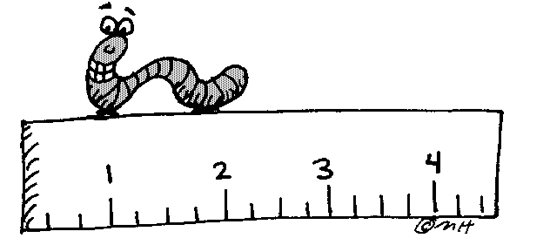
• Use everyday situations to compare and describe lengths and heights of objects. Ask questions such as: Will this box fit on the shelf? How much ribbon do we need to wrap this present? How can we put these books on the shelf in order of height?
• Use measurements to solve mysteries about people in your household. Find out who is the tallest, who has the shortest foot, and so on. Encourage your child to suggest a way to solve each mystery.
• Have your child make a personal measuring tape by linking 10 paperclips together. Go on a scavenger hunt to find things that are longer, shorter, and about the same length as the paperclip measuring tape.
• Keep track of your child’s growth by starting a height chart. Each month, mark your child’s height and talk about the changes that have occurred.
February 1, 2010
For the next while, our focus in math will be exploring, sorting, and
building with shapes.
Your child will be using a 3-D shape collection and might enjoy using shapes he or she finds at home. If you can, help your child collect examples of each of these shapes and send the collection to school in a labelled bag (written in your child's agenda first week of February).


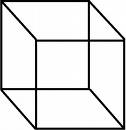
sphere cylinder cone prism cube
We will be building structures with the shapes, so please
choose things that don’t need to be returned — empty boxes, cardboard tubes, clean
empty cans (with no sharp edges), cone-shaped birthday hats, old tennis balls, and so on.
• Ask your child to describe the shape of an object, for example, whether it is like a can, a ball, or a box.
• Challenge your child to check several shapes to see which ones will roll, slide, or stack.
• Ask your child to explain how 2 shapes are similar and different.
• Challenge your child to sort shapes into groups, then to try sorting them a different way.
• Describe the shape of an object and ask your child to guess the object; then switch roles.
